
Affinity chromatography

درباره سایت
آخرین مطالب
- Isolation and Identification of Amino Acids, Vine and Carboxylic
- Isolation and Identification of Amino Acids, Vine and Carboxylic
- ازمایش 3 Making alcohol-derived data
- Alcohols
- alchool test
- Aldehyde & Ketons
- Isolation and Identification of Amino Acids, Vine and Carboxylic
- Identify alkene and alkyne, halide of aliphatic, Identifyand carbohydrates
- Affinity chromatography
امکانات وب
Effective factors in solubility
Polar compounds are usually dissolved in polar solvents and non-polar compounds in non-polar solvents.
In similar compositions, increasing intermolecular force reduces solubility.
In similar compositions, molecular weight gain reduces solubility
In the same combinations, the lateral branch increases solubilit
. Use of solubility in identifying an unknown object
The use of solubility to some extent determines the chemical properties of an organic body. For example, acidic compounds usually dissolve in 5% chloride acid in alkaline and alkaline compounds.
Uses information solvability for some of the unknown combination properties. By solubilizing an object in water, we are somewhat sure about its polarity, or while benzoic acid is not dissolved in water, but if combined with profit, it produces sodium benzoate, which is readily soluble in water.
The use of solubility gives information about the molecular weight of an unknown object, for example, in the case of homologous series having a chemical agent, those whose carbon number is less than 4 in solution, and those whose carbon number is greater than 5 atoms Carbon is usually insoluble in water.
Solvency-based classification
Solubility test for any acute object should be done. This test is important in identifying the main functional groups of the unknown compounds. Solvents are common solvents for solubility testing:
Hydrochloric acid 5% (5% HCl)
Sodium hydrogen carbonate 5% (NaHCO3 5%)
Sodium hydroxide 5% (NaOH 5%)
Sulfuric acid (H2SO4)
Water
Organic solvents
SA
Carboxylic acids of less than 6 carbon atoms and aromatic sulfonic acids
SB
Single-agent amines less than 7 carbon
S1
Single-agent alcohols, aldehydes, ketones, ethers, nitriles and amides less than 6 carbon
S2
Salts of organic acids, amine hydrochloride, amino acids, carbohydrates, polyhydroxy acids, multi-agent acids
A1
Strong organic acids, carboxylic acids with more than 6 carbon, phenols with ortho and para electron receptors, beta-ketones
A2
Poor organic acids, phenols, anols, amines, amides, sulfonamides, typhonols less than 5 carbon, beta-ketones
B
Aliphatic amines of more than 7 carbon, aniline (only one phenyl group), some oxyethers
MN
Miscible neutral compounds have nitrogen or sulfur content of less than 5 carbon
N1
Alcohols less than 9 carbon, aldehydes, methyl ketones, ring ketones, single agent esters
N2
Alkanes, alkenes, ethers, some aromatic compounds with active agents, ketones other than the above group
I
Saturated hydrocarbons, halogenates, aryl halides, diaryl ethers, aromatics with inactive groups
Combustion Test:
About Flame Properties:
Yellow or soot flame Aromatic or Aliphatic unsaturated
Yellow and sooty flame indicates aliphatic hydrocarbon
The blue or blue flame is an indication of the presence of oxygen.
If left intact, pour a few drops of water on it and specify it with acidity or alkalinity. The alkali is a sign of the presence of sodium or other alkali metals
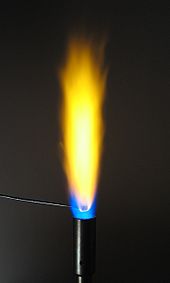
Flame test
- A small amount of the sample enters the flame, and part of the electrons are driven to their base state. The publication in the visible wavelength region of the flame brings a flame.
- The fraction of unbound atoms in the flame is constant and depends on the temperature of the flame. And so the emission rate is directly proportional to the number of atoms in the flame and can be used to measure the concentration of the aspirated sample.
Purpose
When a salt solution of a metal is burned, the flame is colored and each metal ion gives a different color to the flame. Therefore, flame test can be used to check the presence or absence of metal ions in the solution.
Instructions and examples
Put a small amount of the sample in a small crucible or on the tip of the spatula, and then gently apply to the flame first, then darken it to dark red. Observe and observe the following phenomena
Is it melting? What is the characteristics of a flame? (Color, smoke, etc.) Does steam come out? Does something stay in place? About Flame Properties:
A solution of metal salts in a methanol solvent is burned in the form of small 5 ml ampoules. And the unknowns are tested. Each solution has a different flame color.
In atomic emission spectroscopy, heat is used to stimulate atoms, which later emanate these excited atoms.
Remember that atoms generate a linear spectrum

Physical Properties:
If the substance is soluble, the solution color will be clear.
If it is insoluble, it will become cloudy.
If insoluble, it will remain sediment or form 2 phases
Identification of elements:
Qualitative analysis of organic matter by alkaline melting to detect nitrogen, sulfur and halogens:
In order to detect these elements in organic compounds, they must first be converted to ionized mineral compounds and then identified. This conversion may take place in different ways, but the best way to melt compounds with sodium metal. In this method, sodium cyanide (NaCN), sodium sulfide (Na2S) and sodium halide (NaX) are easily recognizable
To acidify the environment, you should not use (HCl) because the formation (FeCl6) of yellow color occurs in the environment and instead of blue Prussia appears green. For this reason, ferric chloride should not be added. As mentioned above, due to air oxidation in warm alkaline environments, sufficient amount of ferric ions is formed, so there is no need to increase the ionic ferric, increasing the amount of dilute solution of potassium fluoride may be the formation of Prussian blue solution in a solution that is easily removable. It helps to smooth out (Fe3 + with F-production FeF63- which is stable and causes Fe3 + to be released from the operating environment). Sulfur as sulfide ion can be detected by lead acetate and acetic acid, or in the form of sodium platinum (alkaline solution of lead acetate) as PbS (black lead).
متن یا آدرس وب سایتی را تایپ کنید یا سندی را ترجمه کنید.
To acidify the environment, you should not use (HCl) because the formation (FeCl6) of yellow color occurs in the environment and instead of blue Prussia appears green. For this reason, ferric chloride should not be added. As mentioned above, due to air oxidation in warm alkaline environments, sufficient amount of ferric ions is formed, so there is no need to increase the ionic ferric, increasing the amount of dilute solution of potassium fluoride may be the formation of Prussian blue solution in a solution that is easily removable. It helps to smooth out (Fe3 + with F-production FeF63- which is stable and causes Fe3 + to be released from the operating environment). Sulfur as sulfide ion can be detected by lead acetate and acetic acid, or in the form of sodium platinum (alkaline solution of lead acetate) as PbS (black lead)
Solubility test
of Luchatlie
6) Temperature effect:
Most solids absorb heat when dissolved, so in most cases the solubility of the sediments increases with temperature. Similarly, the constant result of the multiplication of the dissolution of most low soluble compounds also increases at high temperatures. Using solubility in detecting an unknown object using solubility up to Determines the size of the chemical elements present in the organic body. For example, acidic compounds usually dissolve in 5% chloride acid in alkaline and alkaline compounds
Each group labeled Latin is known as a batch solubility group of compounds.
.

The composition of compounds based on solubility can be shown as follows
SA Carboxylic acids of less than 6 carbon atoms and aromatic sulfonic acids
SB single-agent amines less than 7 carbon
S1 single-agent alcohols, aldehydes, ketones, ethers, nitriles and amides less than 6 carbon
S2 Salt organic acids, amine hydrochloride, amino acids, carbohydrates, polyhydroxides, multifactorial acids
A1 strong organic acids, carboxylic acids with more than 6 carbon, phenols with ortho and para electron receptors, beta-ketones
A2 Poor organic acids, phenols, anols, imines, acids, sulfonamides, thiophenols less than 5 carbon, beta-ketones
B Aliphatic amines more than 7 carbon, aniline (only one phenyl group), some oxyeters
MN The various neutral compounds have nitrogen or sulfur.
N1 Alcohols less than 9 carbon, aldehydes, methyl ketones, ring ketones, single agent esters of more than 5 carbon, less than 8 carbon ethers, epoxides
N2 Alkanes, alkenes, ethers, some aromatic compounds with active agents, ketones other than the above group
I saturated hydrocarbons, halogenates, aryl halides, diaryl ethers, aromatics with inactive functional groups
Solubility in water:
Pour one tenth of the whole solid powder or 2 drops of liquid sample into a test tube and add 3 cc distilled water to it and mix it with a finger. After a while, no trace of liquid or solid specimens has been dissolved. When the laboratory's air is cold, it is useful for a few moments to heat the solution on a gentle flame.
Solubility in profit of 5%
Notice the possible increase in temperature. If the composition looks insoluble, remove a little fluid from the cornea with a dropper and transfer it to a small tube. Add 5% chloride acid solution to drop it to make acidic solution. If formed, it falls into the third group. Never use heat as it may cause hydrolysis.
Solubility in sodium bicarbonate 5%
If the compound was 5% solvent, try solubility in 5% bicarbonate. Particularly notice carbon dioxide emissions. Carboxylic acids, sulfonic acids, and phenolic acids are in this group
Solubility in ether
Perform the test according to solubility in water with ether solvent in a completely dry test tube. It is usually difficult to see the boundary line between two fluids, so it is not dissolved by shaking, if the solution is cloudy. Non-ionized compounds and those having a functional group are usually dissolved in ether
Solubility in profit of 5%
Notice the possible increase in temperature. If the composition looks insoluble, remove a little fluid from the cornea with a dropper and transfer it to a small tube. Add 5% chloride acid solution to drop it to make acidic solution. If formed, it falls into the third group. Never use heat as it may cause hydrolysis.
Solubility in sodium bicarbonate 5%
If the compound was 5% solvent, try solubility in 5% bicarbonate. Particularly notice carbon dioxide emissions. Carboxylic acids, sulfonic acids, and phenolic acids are in this group.
Solubility in sodium chloride acid 5%
Some organic bases, such as naphthylamines, dissolve chlorine hydrate, but precipitate a lot of acid. If the solution was in the fourth group. If it looks insoluble, transfer some liquid from the upper part to the tube with a dropper and add a 5% solution to make it alkaline. Formation of impurity in the fourth group. Do not use heat
Solubility in sodium sulfuric acid
Take this test in a dry test tube. Is color changing visible? Notice the creation of coal, gas exhaust, polymerization, or sedimentation
Solubility in ether
Perform the test according to solubility in water with ether solvent in a completely dry test tube. It is usually difficult to see the boundary line between two fluids, so it is not dissolved by shaking, if the solution is cloudy. Non-ionized compounds and those having a functional group are usually dissolved in ether
(Alkali melting)
Do not forget the protective glasses). In a completely dry (about 150 x 12 mm non-pixel) test tube, throw away a small, clean piece of sodium, approximately 4 mm in size (remove the sodium with a clean and dry knife) and Hold the clamp and warm the bottom of the tube with a small flame so that the sodium is melted inside the tube and in the form of white smoke and vapors rise up to a height of about 2 cm, then remove the tube from the flame and give it a few particles Add solids (about 20 mg) or about three drops of the tested liquid (preferably several times) so that they are poured directly into the bottom of the tube and onto sodium sodas. D (Be careful that there may be a small explosion, so do this test under the hood and under the supervision of the lab instructor), then slowly heat the tube to blush
Identification of halogens:
Apply about 2 ml of the subfiltration solution in a test tube and acidify it with dilute nitric acid, add some silver nitrate solution, make up the precipitate, identify the type of halogen, remove the supernatant by flooding, and Add deionized dilute ammonia solution if the sediment is white and dissolve well in ammonia, the indication of chlorine, and if yellow is light and hardly soluble in ammonia (low solubility), I will leave a sign if the color is yellow and is almost insoluble in ammonia. There is evidence of iodine in the organic body
http://fahl.blogfa.com/post-2.aspx
.+ نوشته شده توسط فاطمه رجبی و مهرناز مرتضوی ها در یکشنبه سی ام مهر ۱۳۹۶ و ساعت 10:32 |
برچسب:
نویسنده: مانی افشاری